Our alpha testers have been blunt—Rover still "sounds like AI." When they say that, they usually mean two things: the content feels superficial, and the style feels artificial. So, we have to make our audio briefs good. And even when they're good, they can't sound like a machine.
Lately, reading the news has been really hard. Even with all of the systemic shocks from the 2nd Trump administration, the increasing extreme actions by ICE make my texts with friends heavy in a way that's difficult to describe. We're all really feeling it.
I hate feeling helpless, confused and reactive. The onslaught of bad news, devoid of context, hampers my ability to cope, plan, or act. It's nice to curl up and hope things go away, but I've always been a "let's do something" kind of person. I need to feel like I'm making progress towards something.
I'm not alone. Our research and user interviews have confirmed it again and again: our media consumption ecosystem is broken – it's harming all of us mentally.
That’s why I’m building Rover. I want a way to actually understand the chaos so I can do something about it. I want a place where we can be smart and curious without dumbing things down so the algorithm can increase our reach. Where we can lean into discourse.
At Rover, we’ve settled on the audio brief as our starting point—think of it as a short, synthetic podcast – to solve this problem: how can I get information to help me make sense of the world?
Ask Rover a question, get a substantive response, and get the tools to put insights into action.
0:00
/0:02
The Slop Problem
So far so good: building something that makes it easy for people to get informed. But there’s a massive hurdle we’re clearing right now: making sure people are interested in engaging with our synthetic content.
Our alpha testers have been blunt—Rover still "sounds like AI." When they say that, they usually mean two things: the content feels superficial, and the style feels artificial.
So, we have to make our audio briefs good. And even when they're good, they can't sound like a machine.
Can AI actually be informative?
To me, good content is informative by default. And informative content has to be retained and be useful. Ask yourself: how do you feel after reading a typical news article? What do you actually retain after blitzing through your newsletters? From many of our interviews we hear "in one ear and out the other".
Our goal is to provide something actionable. That means the content has to stay grounded in authenticity, reliability, and objectivity.
How can AI-content be natural?
Even if the content is good, I'm going to turn off the brief is Rover sounds like AI-slop. This is a hard problem. We’re already seeing video and text slop take over the internet, and platforms like Youtube are already moving to limit it.
The problem is that most models are trained on academic papers, corporate reports, and SEO-optimized web content. That’s the exact opposite of how people actually talk. If the audio brief sounds like a textbook, I'm out. We have to train Rover to be both informative and natural—a bar that is incredibly hard to hit.
I’ve spent the last few weeks retraining Rover to kill the habits that scream "bot."
Academic jargon: no more "pivotal", "seamless", "tapestry"
Excessive transition: cutting out "moreover", "to put it another way", etc.
Rhetorical questions: ditching the "teacher-to-student" tone.
Signposting: Cutting out unnecessary flags like "And this brings us to the core issue..."
Uniformity: Breaking up those steady, 20-word sentences so the rhythm feels more human.
Instead, here are the pillars for Rover going forward.
The content that Rover produces needs to be meaningful, which means: unbiased, objective, true, contextual, actionable, relevant and verifiable
The way that Rover delivers the content needs to be natural, which means: conversational, approachable, concise, direct, and witty.
In short:
"Hey Rover, you're talking to humans. Don't be stupid. Be interesting and useful."
Putting it to the Test
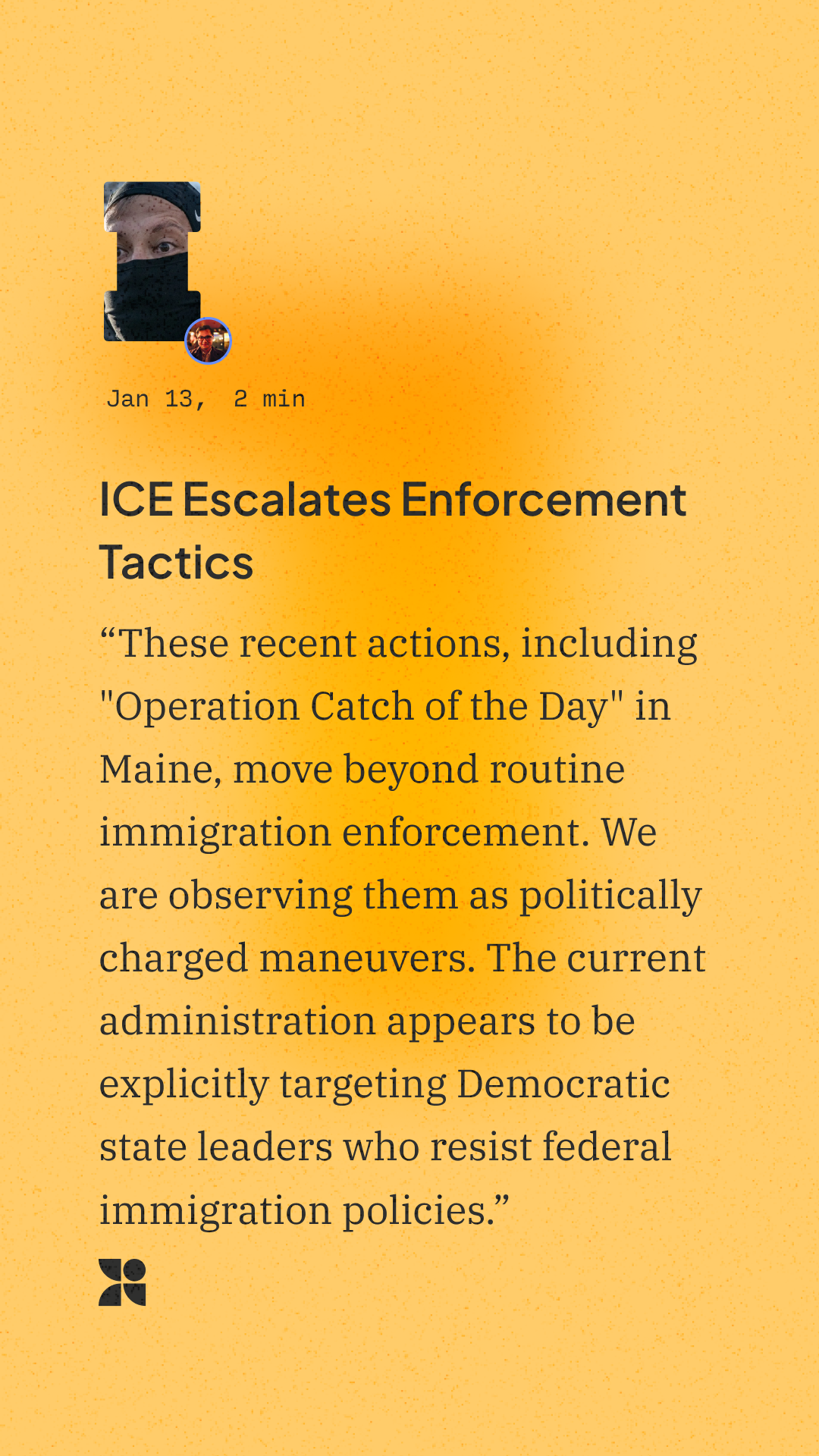
We made some progress recently. As the news about ICE breaking up families became insufferable, I asked Rover: "Unpack the recent ICE actions for me. I'm hearing disturbing things out of Minnesota."
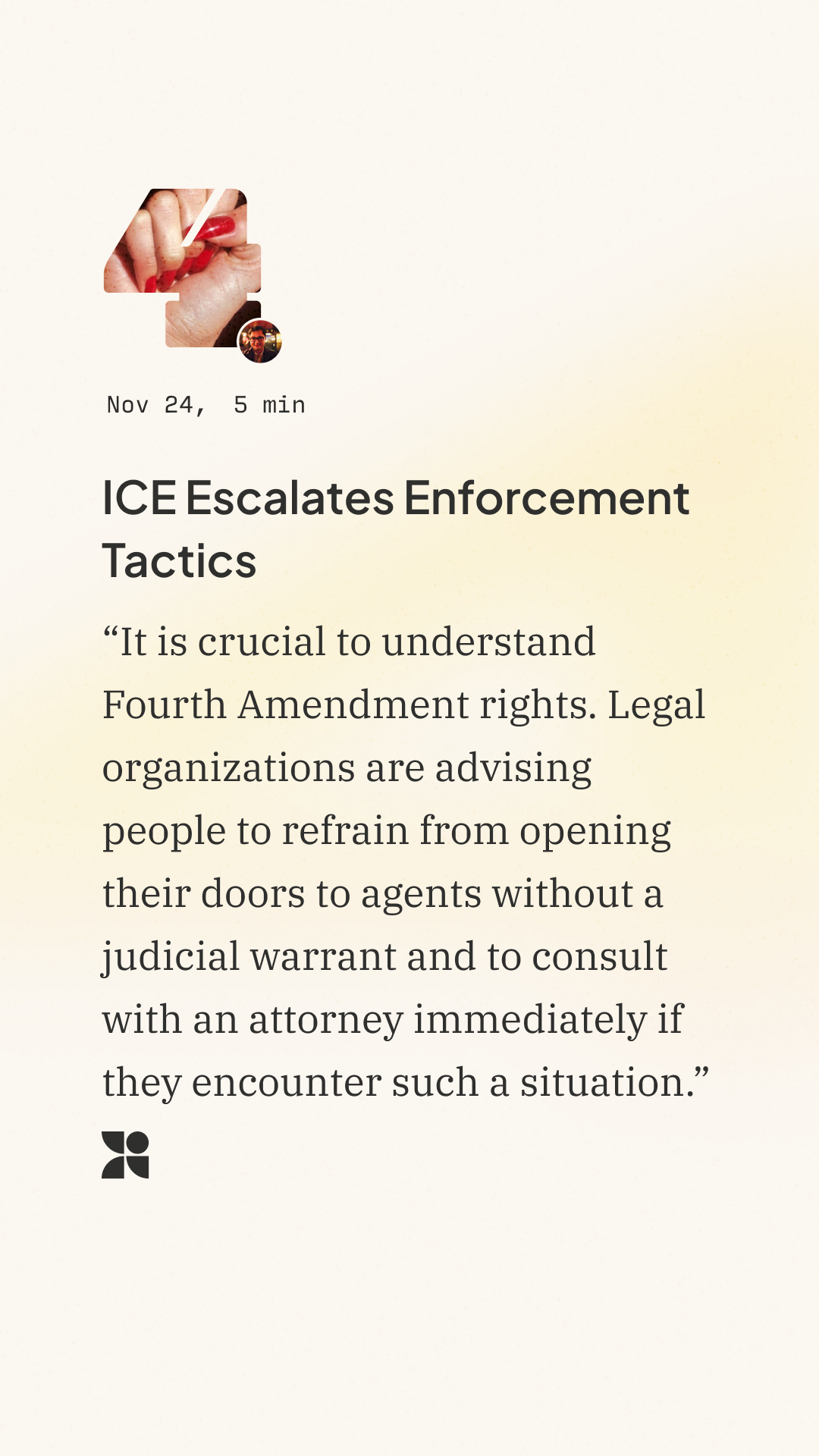
The resulting brief, ICE Escalates Enforcement Tactics Driven by Political Strategy, didn't whitewash the reality. It gave me the context and the specifics I needed over two short minutes—including a nudge to go look up the Fourth Amendment. It felt like a briefing, like how a person actually explains a complex topic to a friend.
Insights from the audio brief
Getting the audio brief to be useful is only the first step, but it's an extremely important one.
If you'd like to be in our next batch of testers, drop me a line.
Follow our journey.
Subscribe for the latest updates.
You might also like
Jan 11
The men of Rover
The team got together over the break in San Francisco. Over rice bowls and ginger sodas, there was a lot to share and plan and we're all very excited about the upcoming weeks.
1 min read
Dec 12
Curious spaces
I mourn the end of that pre-smartphone world. Getting reliable information was harder, but the journey to find it taught us everything.
6 min read
Dec 10
Why Humans Want AI to Make the Call
I'm old enough to remember a time when professional tennis players spent much of the match complaining about
2 min read
Nov 18
Building the Rover Brand (philosophical take)
One image held strong throughout our exploration: a campfire... There's no shouting over each other. No scramble for attention. No performance. Just shared focus and a gentle exchange. Everyone leaves with something they didn't arrive with.
2 min read
Nov 12
Rover is made of exits
My wife works a corporate job, so as the parent with the more flexible schedule, I'm the primary driver for my daughter's activities.